
As a supplier of textilene fabrics, I often get asked about how these amazing materials are made. It's a fascinating process that combines science, technology, and a lot of hard work. So, let's dive into the world of textilene fabric production!
Raw Materials
The first step in making textilene fabrics is gathering the right raw materials. Textilene is typically made from polyester or polyethylene, which are synthetic polymers. Polyester is known for its strength, durability, and resistance to wrinkles and shrinking. Polyethylene, on the other hand, is lightweight, flexible, and has excellent chemical resistance.
These raw materials come in the form of small pellets or granules. They are carefully selected based on their quality, properties, and intended use. For example, if we're making a Wipeable Fabric for Chairs, we'll choose a material that is easy to clean and maintain.
Extrusion
Once the raw materials are selected, they are fed into an extruder. This machine heats the pellets until they melt into a thick, viscous liquid. The molten polymer is then forced through a small opening, called a die, to form long, continuous strands called filaments.
The size and shape of the die determine the diameter and cross-sectional shape of the filaments. For textilene fabrics, the filaments are usually round or oval in shape. The extrusion process is carefully controlled to ensure that the filaments have a consistent diameter and quality.
Spinning
After the filaments are extruded, they are spun into yarns. This process involves twisting the filaments together to create a stronger, more cohesive thread. The yarns can be spun in different ways, depending on the desired properties of the fabric.
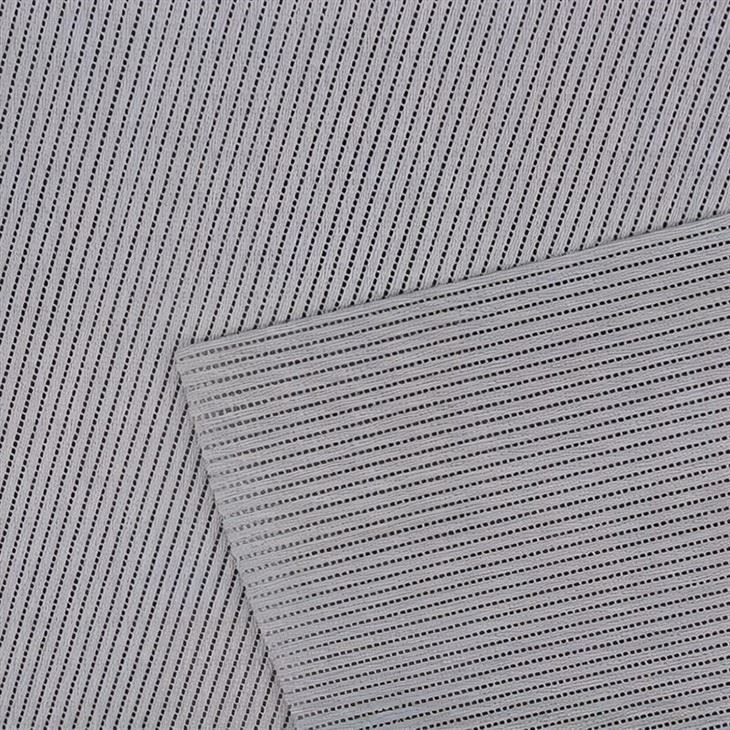
For example, if we're making a Teslin Mesh Fabric, we might use a spinning technique that creates a loose, open weave. This allows air to circulate through the fabric, making it breathable and comfortable to sit on. On the other hand, if we're making a Teslin Sunshade Mesh, we might use a tighter weave to block out more sunlight.
Weaving
Once the yarns are spun, they are ready to be woven into fabric. Weaving is the process of interlacing two sets of yarns at right angles to create a stable, flat structure. There are different types of weaving techniques, but the most common one used for textilene fabrics is the plain weave.
In a plain weave, the warp yarns (the ones that run lengthwise) and the weft yarns (the ones that run crosswise) are woven over and under each other in a simple, alternating pattern. This creates a strong, durable fabric that is resistant to tearing and fraying.
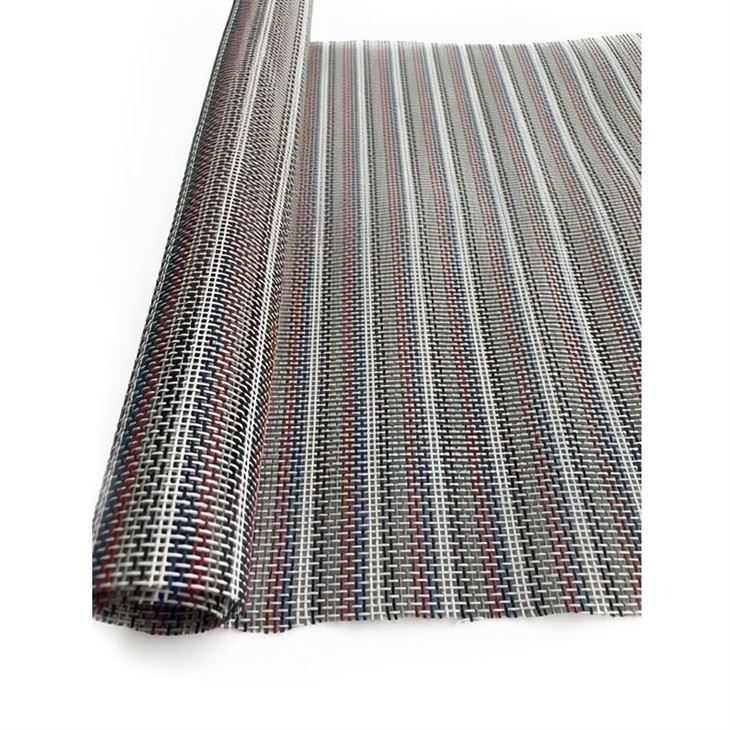
The weaving process is carried out on a loom, which is a machine that controls the movement of the yarns. The loom can be adjusted to create different patterns and textures in the fabric. For example, we might use a loom to create a pattern of stripes or dots on the All Weather Fabric Outdoor Furniture.
Coating and Finishing
After the fabric is woven, it may undergo a coating and finishing process to enhance its properties. Coating involves applying a layer of a special material, such as PVC or acrylic, to the surface of the fabric. This can improve the fabric's resistance to water, UV rays, and stains.
Finishing, on the other hand, involves treating the fabric with chemicals or heat to give it a specific look or feel. For example, we might use a finishing process to make the fabric softer, smoother, or more wrinkle-resistant.
Quality Control
Throughout the production process, quality control is of utmost importance. We have a team of experienced technicians who monitor every step of the process to ensure that the fabric meets our high standards. They check the quality of the raw materials, the extrusion process, the spinning process, the weaving process, and the coating and finishing process.
Samples of the fabric are taken at regular intervals and tested for strength, durability, colorfastness, and other properties. If any issues are detected, the production process is adjusted immediately to ensure that the final product is of the highest quality.
Applications of Textilene Fabrics
Textilene fabrics have a wide range of applications, thanks to their many desirable properties. Here are some of the most common uses:
- Outdoor Furniture: Textilene fabrics are ideal for outdoor furniture because they are weather-resistant, easy to clean, and comfortable to sit on. They are often used for chairs, lounges, and umbrellas.
- Marine Applications: Textilene fabrics are also used in the marine industry because they are resistant to water, salt, and UV rays. They are often used for boat covers, bimini tops, and cushions.
- Automotive Interiors: Textilene fabrics are sometimes used in automotive interiors because they are durable, easy to clean, and have a stylish appearance. They are often used for seat covers, door panels, and headliners.
- Fencing and Screening: Textilene fabrics can be used for fencing and screening because they are strong, durable, and provide privacy. They are often used for pool fences, garden fences, and privacy screens.
Why Choose Our Textilene Fabrics
As a leading supplier of textilene fabrics, we take pride in offering high-quality products at competitive prices. Here are some of the reasons why you should choose our fabrics:
- Wide Range of Options: We offer a wide range of textilene fabrics in different colors, patterns, and textures to meet your specific needs. Whether you're looking for a Wipeable Fabric for Chairs or a Teslin Fence Fabric, we have you covered.
- High-Quality Materials: We use only the highest quality raw materials in our production process to ensure that our fabrics are strong, durable, and long-lasting.
- Advanced Manufacturing Technology: We invest in the latest manufacturing technology to ensure that our fabrics are produced with the highest level of precision and quality.
- Excellent Customer Service: We are committed to providing excellent customer service to our clients. Our team of experienced professionals is always ready to answer your questions and help you find the right fabric for your needs.
If you're interested in purchasing our textilene fabrics, please don't hesitate to contact us. We'd be happy to discuss your requirements and provide you with a quote. Let's work together to find the perfect fabric for your project!
References
- "Textile Manufacturing Processes." Encyclopedia Britannica.
- "Polyester and Polyethylene: Properties and Applications." Journal of Polymer Science.
- "Weaving Techniques for Textile Fabrics." Textile Research Journal.